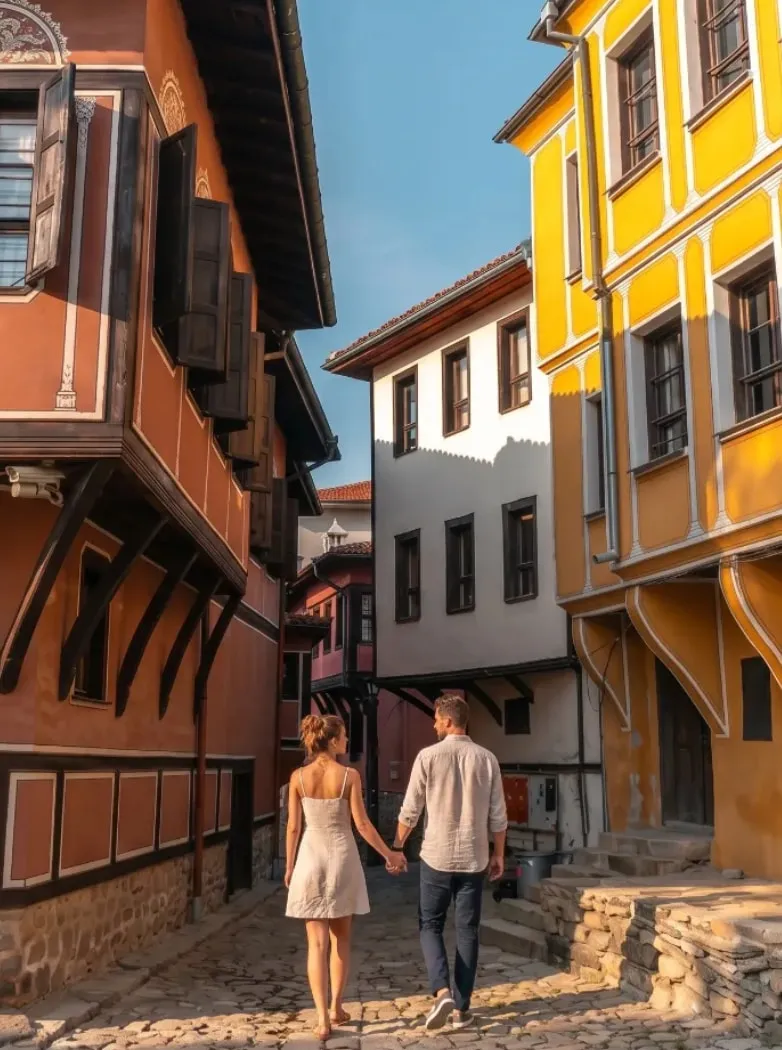
Bulgarian food in Sofia: dishes to try and where to eat them
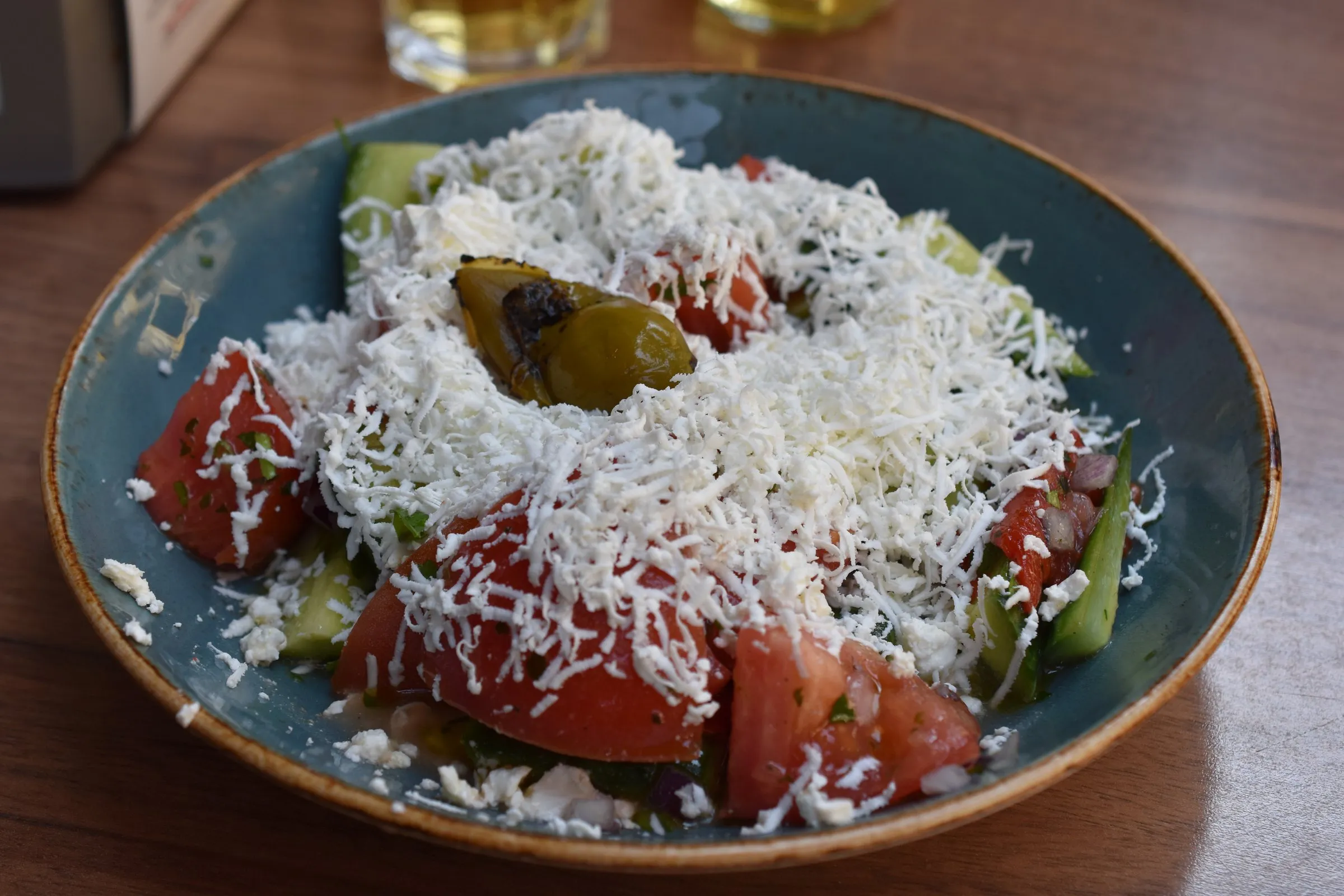
Bulgarian food is simple, fresh and generous: big salads, grilled meat, stews baked in clay pots, thick yogurt and a lot of white cheese. This guide covers the dishes worth ordering, how a meal in a traditional tavern works, what things cost now that Bulgaria pays in euros, and a short list of places in Sofia that we checked are open in 2026.
What to eat
- Shopska salad (шопска салата). Tomatoes, cucumbers, peppers and onion under a thick layer of grated white cheese. Almost every meal starts with one.
- Tarator (таратор). A cold soup of yogurt, cucumber, dill, garlic and walnuts. Perfect on a hot summer day.
- Banitsa (баница). Filo pastry layered with white cheese, eggs and yogurt. Bakeries sell it warm in the morning.
- Kebapche and kyufte (кебапче, кюфте). Grilled minced meat. Kebapche is the long, sausage-shaped one, seasoned with cumin and black pepper; kyufte is a flat, round patty. Both usually come with chips and grated cheese.
- Kavarma (каварма). Meat, usually pork or chicken, baked with peppers and onion and served in a clay pot.
- Sarmi (сарми). Cabbage or vine leaves rolled around rice, with or without minced meat.
- Mish-mash (миш-маш). A summer scramble of eggs, peppers, tomatoes and white cheese. Meat-free and very good.
- Lyutenitsa (лютеница). A thick relish of roasted peppers, tomatoes and often aubergine. Spread it on bread or eat it with grilled meat.
- Kiselo mlyako (кисело мляко). Bulgarian yogurt, thick and tangy. It goes into soups and sauces, and it’s great on its own with honey.
- Sirene and kashkaval (сирене, кашкавал). Sirene is the white brined cheese, close to feta, that tops almost everything. Kashkaval is the mild yellow cheese, often breaded and fried.
- Mekitsa (мекица). Fried dough made with yogurt, eaten for breakfast with powdered sugar, jam, honey or white cheese.
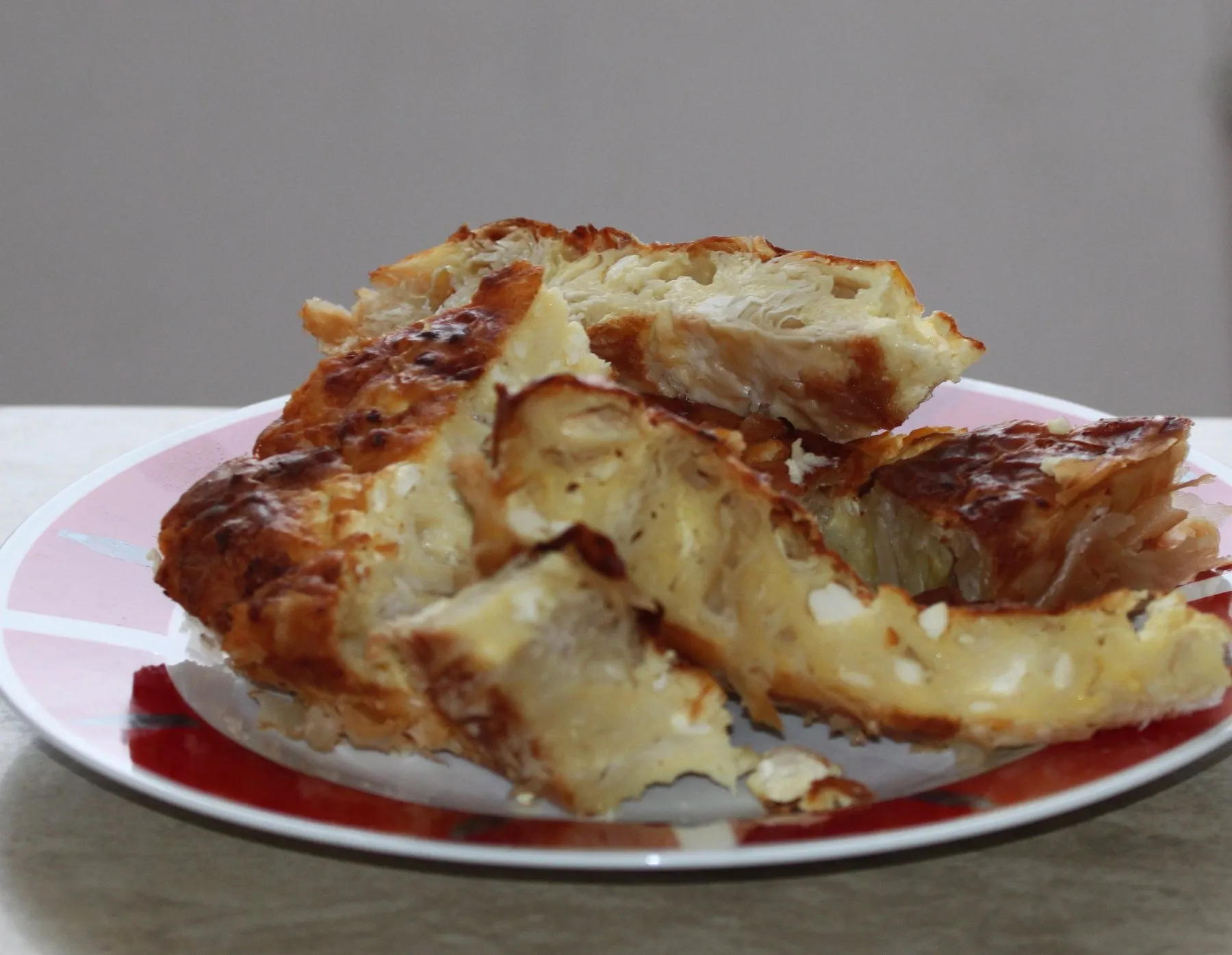
Photo: Biser Todorov, CC BY 3.0 (cropped)
What to drink
- Boza (боза). A thick, slightly sour and sweet fermented grain drink. The classic breakfast is banitsa with boza.
- Ayran (айрян). Yogurt thinned with water and a pinch of salt. Cold, light and the local drink with grilled meat.
- Rakia (ракия). Fruit brandy, most often grape or plum, sometimes apricot or pear. It’s served in 50 ml measures and sipped slowly with the salad, never knocked back as a shot.
- Wine. Three local reds to look for:
- Mavrud, a dark, tannic Thracian grape grown mainly around Asenovgrad and Perushtitsa, near Plovdiv.
- Melnik (Shiroka Melnishka loza), a late-ripening red from the warm southwest, around Sandanski and Petrich.
- Rubin, a Bulgarian cross of Nebbiolo and Syrah, bred in Pleven in the 1940s.
Mehana culture and how to order
A mehana (механа) is a traditional tavern: wooden beams, woven tablecloths, a big grill and, in some places, live folk music in the evening. Meals are long and social, and nobody rushes you out.
A typical order goes like this:
- Salad and rakia first. Bulgarians start with a shopska or another salad and a small rakia, and take their time over it.
- Then the grill or a clay-pot dish. Plates arrive as they’re ready, not all at once.
- Bread is ordered separately and appears on the bill.
- Ask for the bill when you’re done: “smetkata, molya” (сметката, моля). It usually comes only when you ask.
Menus list portion sizes in grams, which helps you judge how much to order. One quirk worth knowing: in Bulgaria a nod can mean “no” and a shake of the head can mean “yes”. If a waiter’s answer confuses you, say “da” (yes) or “ne” (no).
What it costs in 2026
Bulgaria switched to the euro on 1 January 2026, so menus are in euros now. Rough prices in Sofia this autumn:
- Banitsa from a bakery: about €1–2.50
- Shopska salad: about €4–10, depending on how central and smart the place is
- A main course in a central restaurant: about €10–20
- Rakia, 50 ml: about €3–6 for most; aged reserve bottles cost much more
- Draught beer, 0.5 l: about €2–5
- Cappuccino: about €2–4.50
- Mid-range dinner for two, three courses without drinks: about €45–100
For a reference point, on Shtastliveca’s autumn 2026 menu on Vitosha Boulevard, a shopska salad is €9.80 and grilled kebapcheta with chips are €12. Neighbourhood places away from the centre cost less.
Tipping and paying
Tipping isn’t compulsory, but about 10% is normal in restaurants when you’re happy with the service. Check the bill first, because some places add a service charge, especially for large groups. In cafés, rounding up is enough. Keep some cash for markets and small bakeries. For more on money, cards and getting around, see our Bulgaria travel tips.
Vegetarian, pork-free and kosher
Vegetarians eat well here. Shopska, tarator, banitsa, mish-mash, lyutenitsa and meat-free sarmi are standard everywhere. Look for the word postno (постно), “Lenten”, which marks dishes without meat, traditionally without dairy too. Some restaurants, Shtastliveca among them, mark vegetarian and vegan dishes on the menu.
Pork is very common in Bulgarian cooking. Kebapche is usually a mix of pork and beef, kavarma is often pork, and meat-filled sarmi can contain it too. Useful phrases:
- Bez svinsko (без свинско): without pork
- Ne yam svinsko (не ям свинско): I don’t eat pork
- Ima li svinsko? (има ли свинско?): is there pork in it?
On menus, svinsko or svinski means pork, pileshko chicken, teleshko veal or beef, and agneshko lamb.
Kosher food is limited. Chabad of Bulgaria runs the King David kosher restaurant at its centre at 38 Stara Planina Street in Sofia, and organises Shabbat meals for visitors that must be booked in advance on the Chabad Bulgaria website. Chabad recommends checking that the restaurant is open before you go.
Where to eat in Sofia
We only list places we found operating in 2026. Book ahead for dinner, especially at weekends.
- Hadjidraganov’s Houses (Hadjidraganovite Kashti), 75 Kozloduy St. A classic mehana in restored 19th-century houses, each room styled after a different Bulgarian town. Live folk music in the evenings, except Tuesdays. A good choice for a first, full-on Bulgarian dinner.
- Raketa Rakia Bar, 17 Yanko Sakazov Blvd. Socialist-era retro decor, a long rakia list and hearty Bulgarian food. Fun for an evening with friends; it gets busy, so reserve.
- Moma Bulgarian Food & Wine, 28 Solunska St. Traditional recipes with a modern touch, served in several dining rooms and a courtyard.
- Shtastliveca, 27 Vitosha Blvd. A Bulgarian restaurant group that began in Veliko Tarnovo in 1997, with a long menu and a separate vegetarian and vegan section, right on Sofia’s main shopping street. Pricier than an average mehana.
Markets
- Zhenski Pazar (the Women’s Market), Stefan Stambolov Blvd. Sofia’s oldest open-air market, near Lions’ Bridge. Come in the morning for seasonal fruit and vegetables, white cheese, nuts, dried fruit and halva, since many stalls pack up by late afternoon. Keep an eye on your bag.
- Central Market Hall (Halite), 25 Maria Luiza Blvd. The 1911 market hall reopened after a renovation in 2024 and is now mainly a Kaufland food market. It’s no longer a place for a sit-down meal, but it’s handy for lyutenitsa, cheese, rakia and wine to take home. In the basement you can see part of Roman Serdica’s fortress wall and a Roman bath. It stands right next to the Sofia Synagogue.
How we do it
Our Sofia walking tour takes you through the cathedrals, Roman Serdica, the history of the Jews of Bulgaria and the everyday city in between, and your guide will happily point you to a good lunch spot nearby. Food and drinks aren’t included, so you choose where and how much. For more ideas in the city, see our guide to things to do in Sofia.