Spa in Bulgaria: hot springs, spa towns and pools near Sofia
Bulgaria sits on a lot of hot water. This guide covers the mineral pools within an hour of Sofia, the two hot-spring stops at the end of our day tours, and the spa towns worth a night or two, plus what a pool day costs, what to pack and when to go.
A country of hot springs
Bulgaria’s official tourism portal counts more than 550 known mineral water sources with around 1,600 springs between them, and the country is often described as second only to Iceland in Europe for mineral springs. The water comes out anywhere from cool to boiling, and much of it is drunk as well as bathed in. Thracians and Romans built towns around these springs, and Roman remains still stand in spa towns like Hisarya and Kyustendil.
One word to learn: banya means “bath”. When it’s part of a place name, as in Sapareva Banya or Pavel Banya, hot water is usually close by.
Hot pools within an hour of Sofia
- Bankya. A small spa town 17 km west of the centre, officially part of Sofia. Its grand mineral bath, opened in 1911, was restored and reopened in 2022, with a thermal pool at around body temperature and a separate sauna zone. The October 2026 price list showed about €8 for 90 minutes in the thermal zone and about €18 for three and a half hours with the saunas. Open daily 09:00–20:00.
- Pancharevo. About 12–15 km south-east of the centre, by the lake on the road to Samokov. The old public bath, built in 1945 on Roman foundations, was listed as open in March 2026, with pools at about 37°C and 42°C. By the lake, the Korali complex has outdoor pools cooled to 29–34°C; its posted prices in October 2026 were €15 per adult on weekdays and €20 at weekends.
- Rudartsi. A village on the western slopes of Vitosha, 18 km from Sofia, with an outdoor complex of mineral pools at about 28°C. Think summer lido rather than hot spring, and check this year’s season dates first.
- Central Sofia. The city’s own spring, about 45°C at the source, runs from public taps beside the old Central Mineral Bath, where locals fill big bottles. The building is now the city’s history museum, and Sofia’s other historic baths (Gorna Banya, Knyazhevo, Ovcha Kupel) are closed for now. The city took over the Gorna Banya building in December 2025 and was still designing its restoration in July 2026.
Sapareva Banya and Rila Rock
Sapareva Banya, about 80 km south of Sofia at the foot of Rila, has the hottest spring in Bulgaria. Surveys in 1957 found water and steam 73 metres underground, and today a geyser-fountain in the town centre sends up water at about 103°C, the column periodically reaching 18 metres. The municipality calls it the hottest geyser-fountain in continental Europe. The town also has four public pools and a municipal bathhouse.
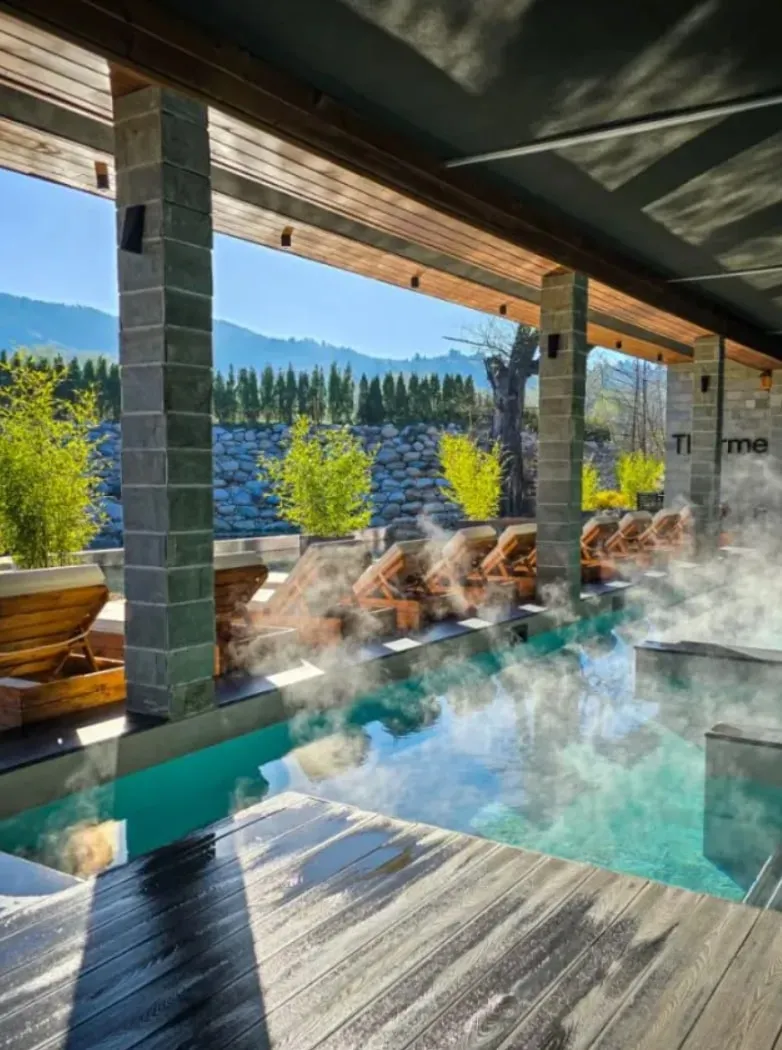
Just above the town, on the road up towards Panichishte, Rila Rock is a complex with five outdoor mineral pools facing the mountains, saunas and a restaurant. Tour operators listed entry at about €20 in 2026, with towel hire extra.
Sapareva Banya pairs well with the Seven Rila Lakes: the chairlift at Panichishte is about 20 minutes’ drive further up, so you can hike in the morning and soak in the afternoon. Our Vitosha, lakes and hot pools tour also ends at Rila Rock, after a day on Vitosha and by the Pasarel and Iskar lakes.
Banya and Pulse Therme, near Bansko
The village of Banya, in the Razlog valley a few kilometres from Bansko, has around 70 hot springs in and around it. Pulse Therme Banya describes itself as the largest mineral spa in Bulgaria: more than 6,000 square metres of indoor pools, saunas, steam rooms and an outdoor pool facing the Pirin mountains. The water comes from its own spring at about 58°C and is cooled before it reaches the pools.
According to its official site, it’s open daily 09:00–22:00 and sets a minimum age of 14, so check the current rules if you have children with you. A free shuttle runs from three stops in Bansko. In winter, our Bansko snow day ends here with three hours in the pools.
Spa towns worth a night
- Velingrad. Western Rhodopes, about 130 km from Sofia. Promoted as the spa capital of the Balkans, with around 70–80 springs at 28–91°C. Walk around Kleptuza, the largest karst spring in Bulgaria.
- Hisarya. 40 km north of Plovdiv. Sixteen natural springs, six drilled wells, and Roman walls up to 11 m high. People come to drink the water as much as to bathe in it.
- Kyustendil. 90 km south-west of Sofia. Roman Pautalia was known for its shrine to Asclepius, god of medicine; today the town has more than 40 mineral springs.
- Devin. In the Rhodopes, about 220 km from Sofia. It gives its name to one of Bulgaria’s best-known bottled waters and makes a good base for the Trigrad gorge.
- Pavel Banya. In the Valley of the Roses, 24 km from Kazanlak. Nine hot springs and a long tradition of rehabilitation stays.
- Kostenets. 63 km south-east of Sofia, at the foot of Rila. Spa hotels and a waterfall about 3 km from the village.
- Sandanski. About 157 km south of Sofia, near Melnik. Often called the warmest town in Bulgaria, so it works well outside summer.
- Varshets. About 90 km north of Sofia. The tourism ministry calls it Bulgaria’s oldest spa resort; the first mineral bath opened in 1910.
What a mineral pool day looks like
Most places work the same way. You pay at the desk for a set number of hours or a full day, get a wristband or locker key (often with a small refundable deposit), change, shower and move between pools at different temperatures. Saunas and steam rooms are often a separate, pricier zone. Bigger complexes have a restaurant, so a typical visit is two to four hours with lunch in the middle.
When we checked in October 2026, a pool complex near Sofia cost roughly €8–20 per adult. Large spa centres with sauna zones cost more, and prices change, so check the official site first.
Pool etiquette and what to pack
- A swimsuit and pool sandals. Wet tiles are slippery, and floors between indoor and outdoor areas get cold.
- A towel, and a robe in winter. Some places rent them for extra.
- A swim cap if you own one. Rules differ from place to place.
- Some cash. Locker deposits are sometimes cash only.
- A water bottle. Hot water dehydrates you faster than you’d think.
- Shower before you get in, and again between sauna and pool. Leave jewellery at the hotel.
Who should take it easy
Spa towns list many conditions their water has traditionally been used for. Treat that as tradition, not medical advice. Hot water raises your body temperature and makes your heart work harder. If you’re pregnant, have a heart condition or blood pressure problems, or are bringing babies or small children, ask your doctor before you go. Keep soaks short, get out if you feel dizzy, and skip alcohol. For young kids, look for children’s pools with cooler water (Bankya’s is about 30°C), and remember some complexes set a minimum age.
When to go
- November to March is the best time for outdoor hot pools: cold air, lots of steam and often snow on the peaks.
- Summer works too, but hot pools feel heavy at midday. Go late in the afternoon, pick cooler pools like Rudartsi or Korali, or pair a soak with the Rila Lakes hike.
- Weekdays are quieter. Sofia families fill the pools at weekends, and some places charge more then.
How we do it
Two of our day tours from Sofia end in hot water: Vitosha, lakes and hot pools finishes at Rila Rock above Sapareva Banya, and in winter the Bansko snow day ends with three hours at Pulse Therme Banya. Pool entry is paid on site. If you’d rather spend a night or two in Velingrad or Hisarya, tell us what you’re after and we’ll arrange the transfers and suggest spa hotels that fit.